
Keep the worker mobile
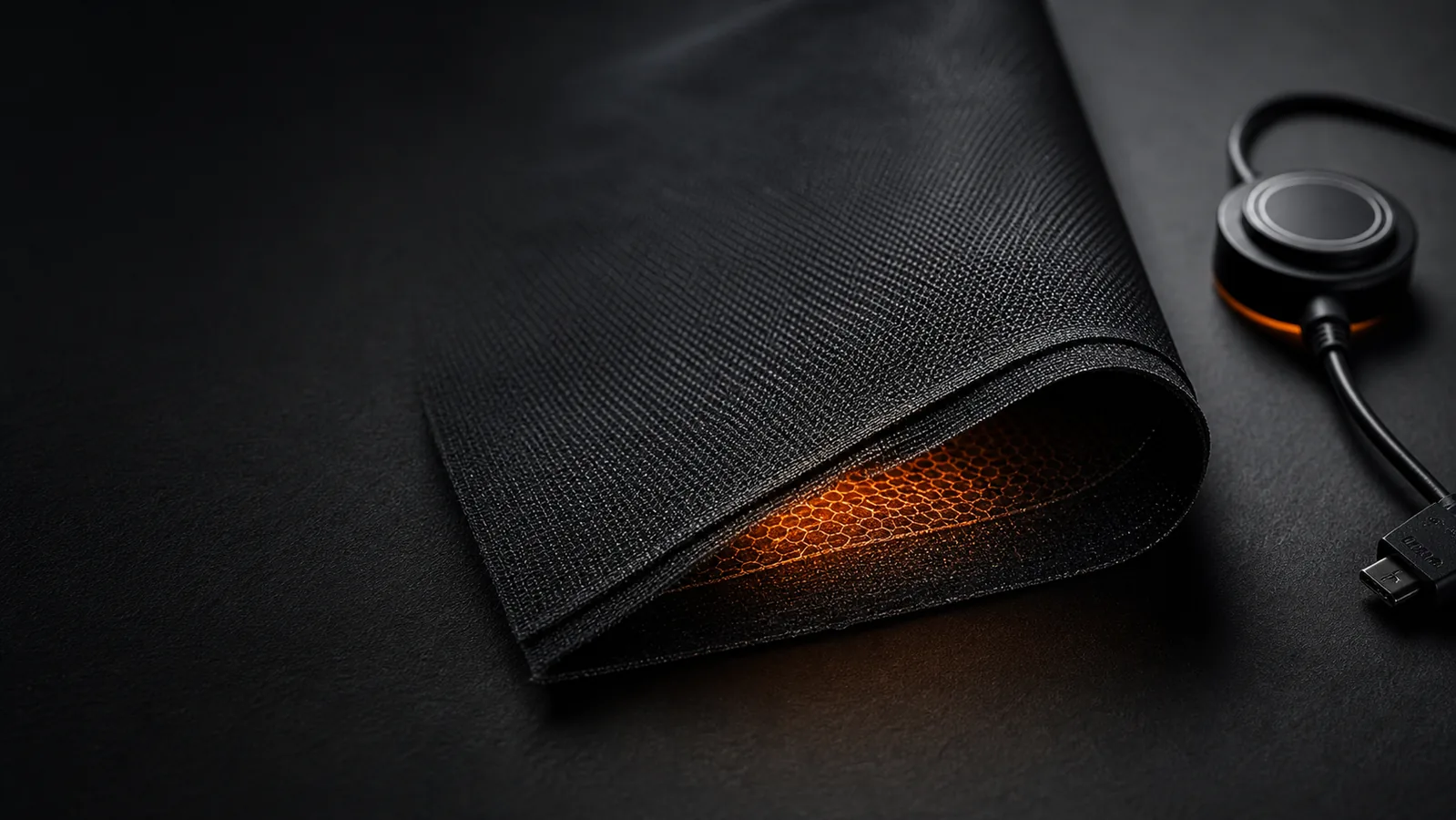
An approximately 0.3 mm textile-compatible heating structure adds active warmth without relying on excessive insulation around tools and PPE.
Application engineering
THERMOVEX connects flexible nano-carbon materials, sensing and intelligent control into application-specific thermal systems for global partners.
Industrial workwear solution brief
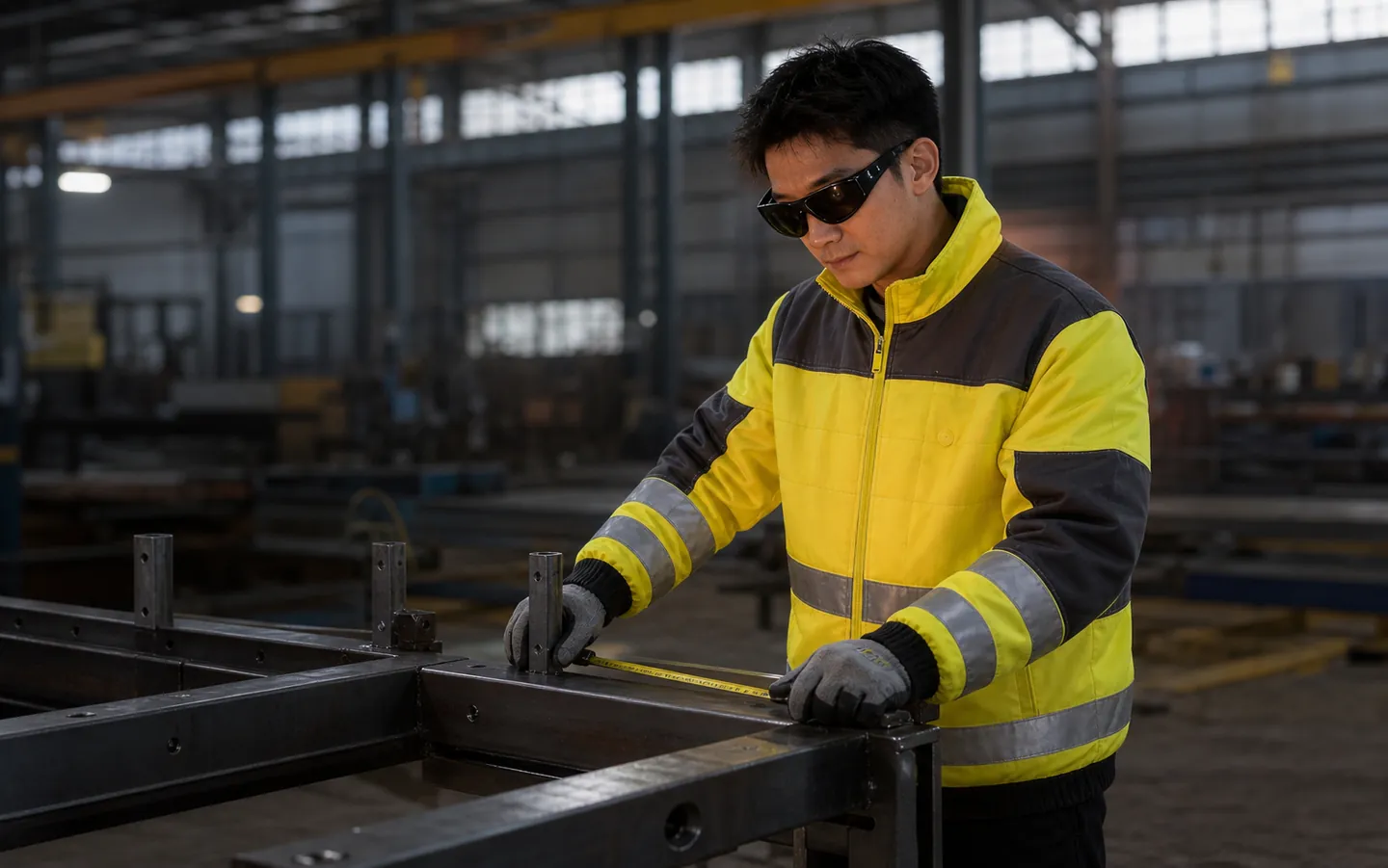
Workers in utilities, oil and gas, ports, logistics, cold-chain, construction, municipal services, courier operations and security can face temperatures around -10 to -15°C or below, together with strong wind, snow, rain and long shifts. Passive insulation adds bulk but cannot respond as activity and exposure change.
An approximately 0.3 mm textile-compatible heating structure adds active warmth without relying on excessive insulation around tools and PPE.
Typical 3-5-zone layouts target the back, waist, abdomen, chest or other areas selected around posture, movement and exposure.
A 5 V reference platform, common USB power bank and NTC closed-loop control support multi-level warmth as workload and weather change.
Runtime is typically planned around 4-6 hours and is tuned by ambient temperature, heat setting, garment insulation and battery capacity.
Translated and engineered from the submitted outdoor-worker thermal protection solution. Final temperature, runtime, battery, wash care, PPE compatibility and regional conformity are confirmed for each customised product.
Discuss a workwear program →Latest application design boards
These current design boards connect the heating platform to recognisable product experiences while keeping voltage, sensing, zone geometry and validation inside the engineering conversation.
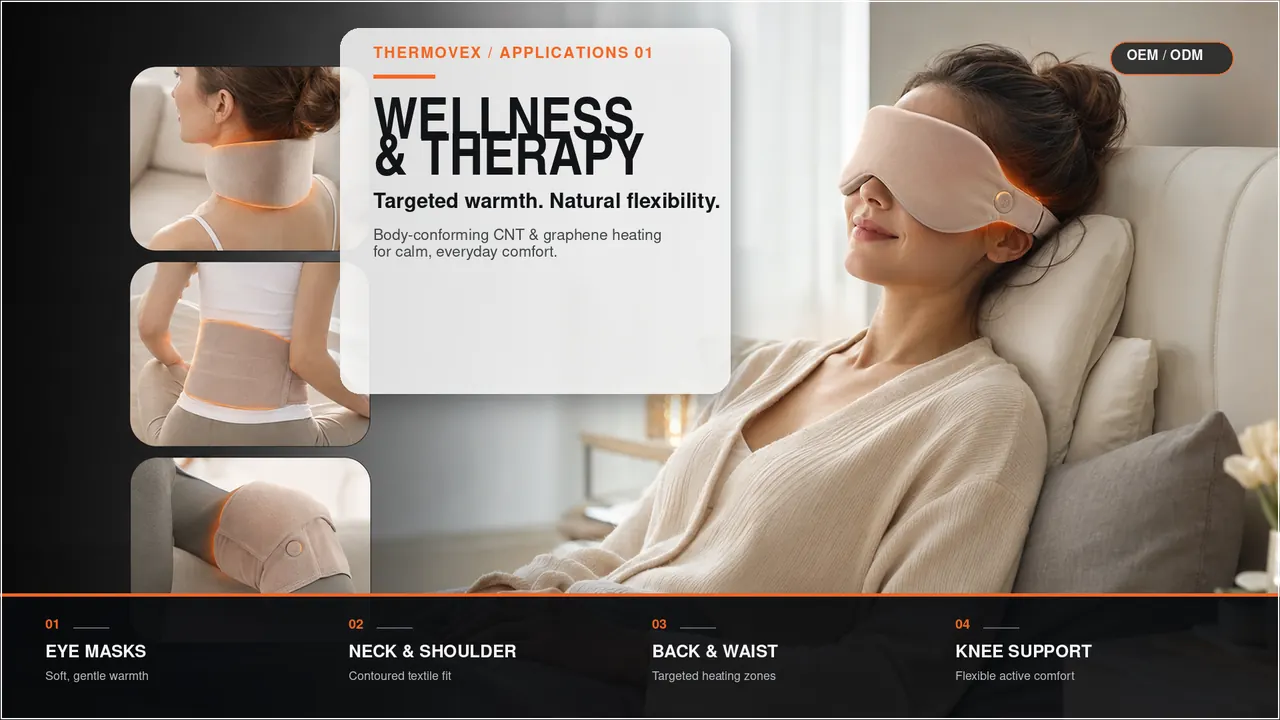
Body-conforming thermal-comfort formats for eye, neck, back, waist and knee applications.
Targeted zones · conservative temperature envelope · removable or cleanable textile covers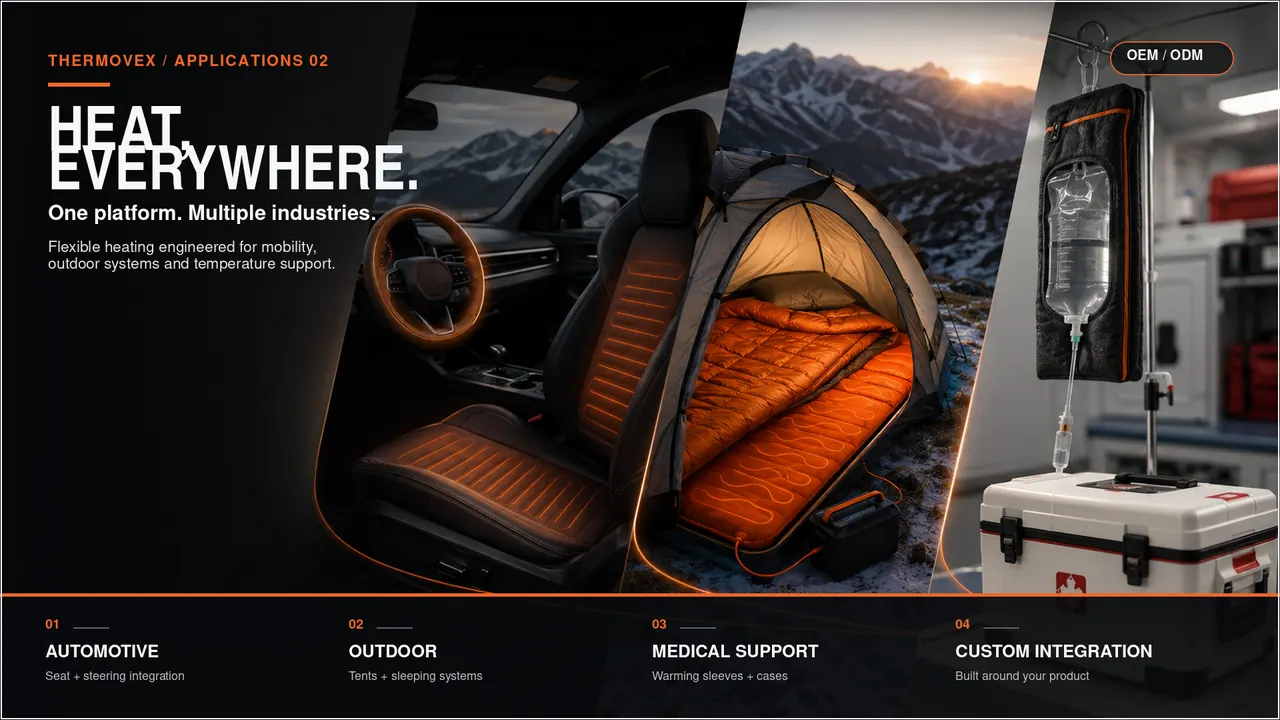
Flexible heating engineered for mobility, outdoor systems, specialist warming and custom product integration.
Geometry-led modules · product-specific sensors · OEM / ODM interfaces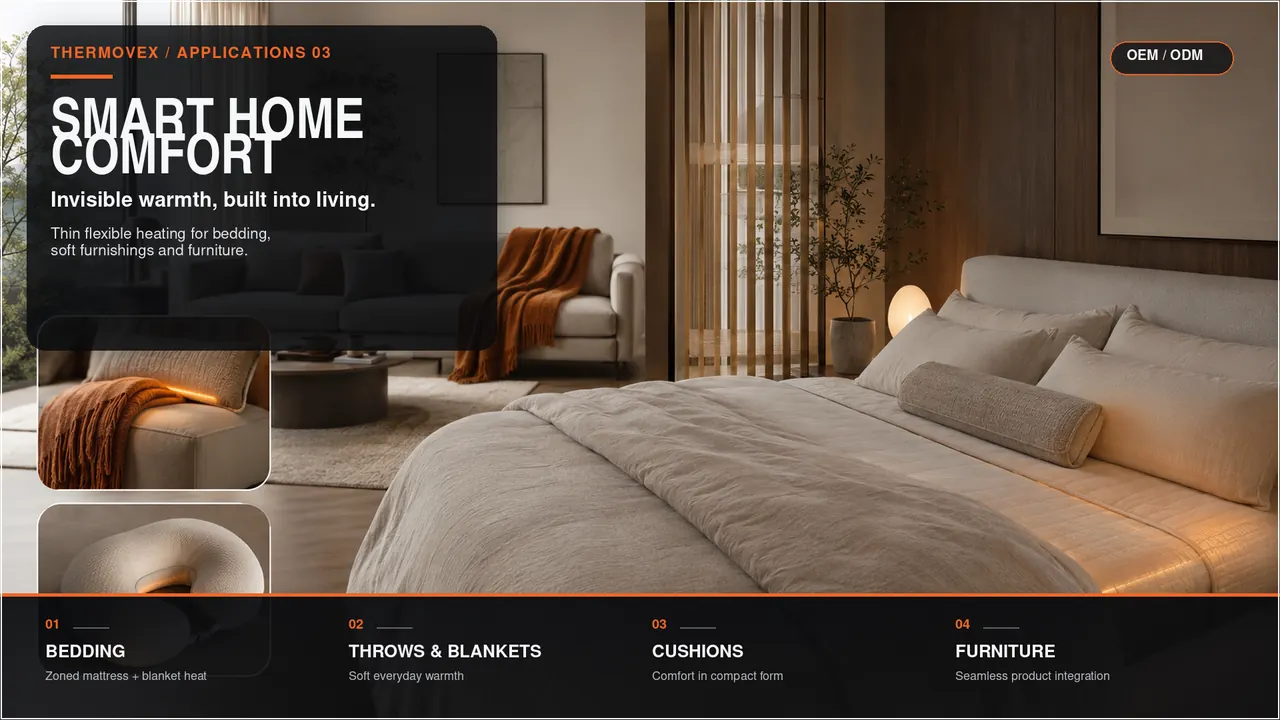
Discreet broad-area warmth for bedding, throws, cushions, furniture and hospitality products.
5 V compact to 24 V large-area · discreet controls · broad, balanced coverage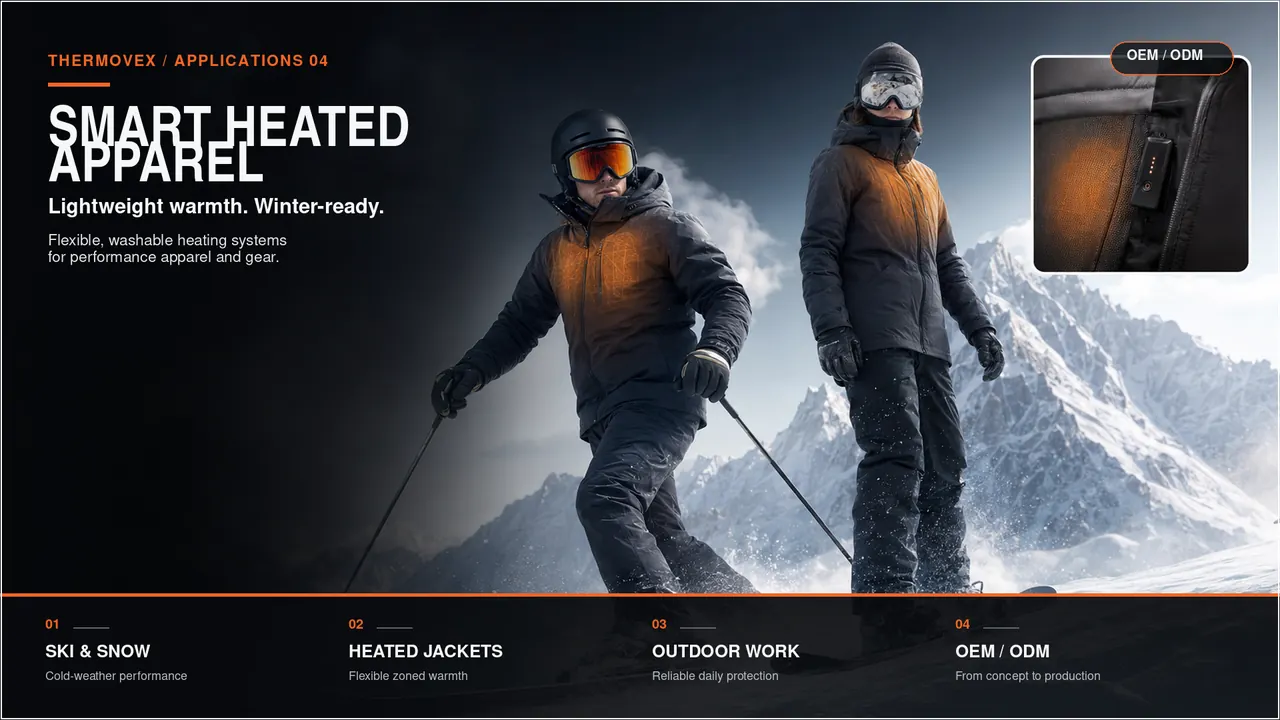
Low-profile, wash-ready heating systems for snow sports, outdoor apparel and professional workwear.
Typically 3–5 zones · 5 V or 12 V · pattern-specific integrationWellness imagery represents thermal-comfort concepts only. Medical claims, regulated-device pathways and specialist logistics applications require separate project-specific validation and regulatory review.
Where flexible heat creates value
The best heating solution is not defined by temperature alone. It must work with product form, power, movement, care, safety and the expectations of the target market.
 01
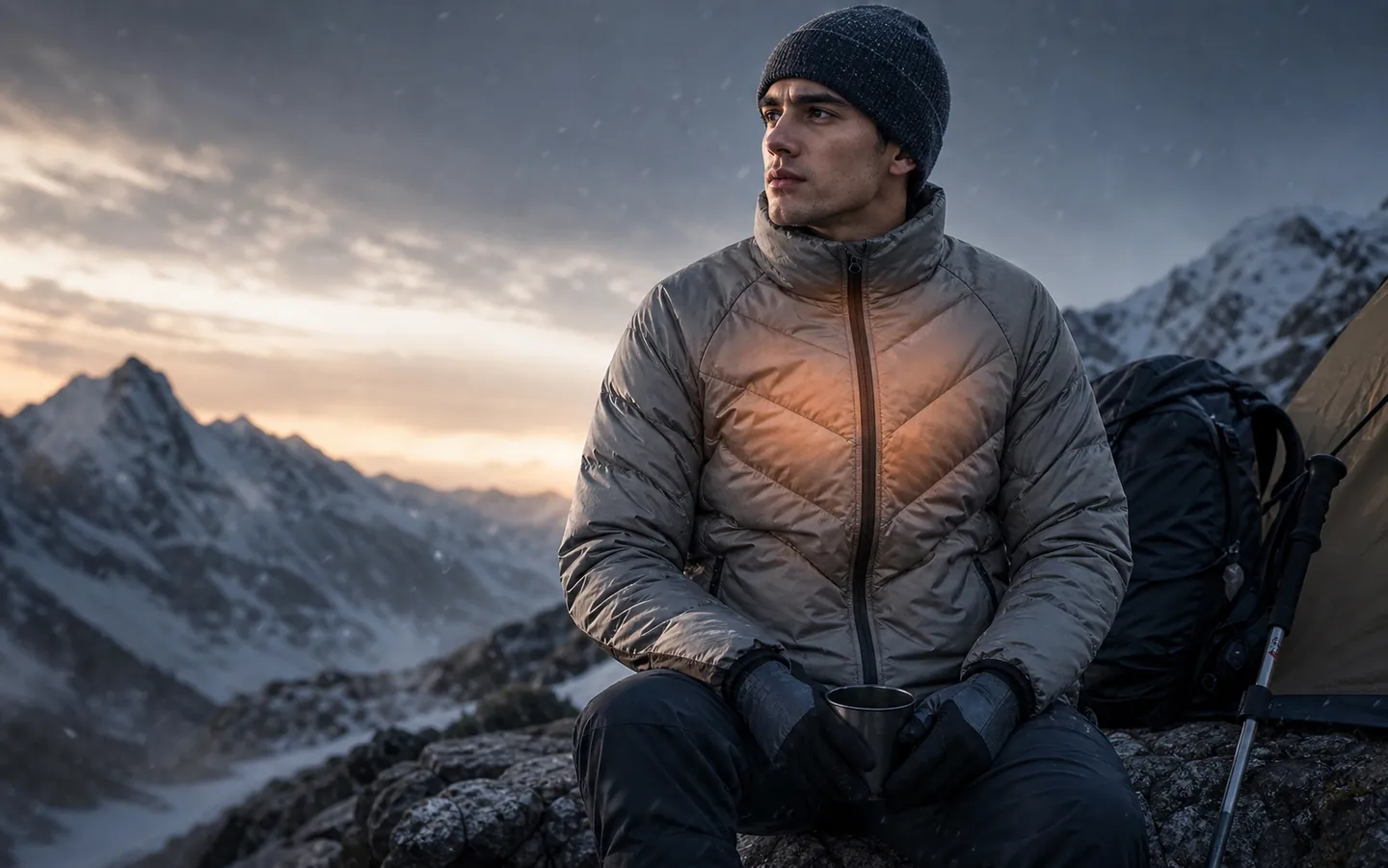
01Targeted warmth for technical apparel, sleeping systems and portable outdoor equipment in changing cold conditions.
Low weight / weather exposure / runtime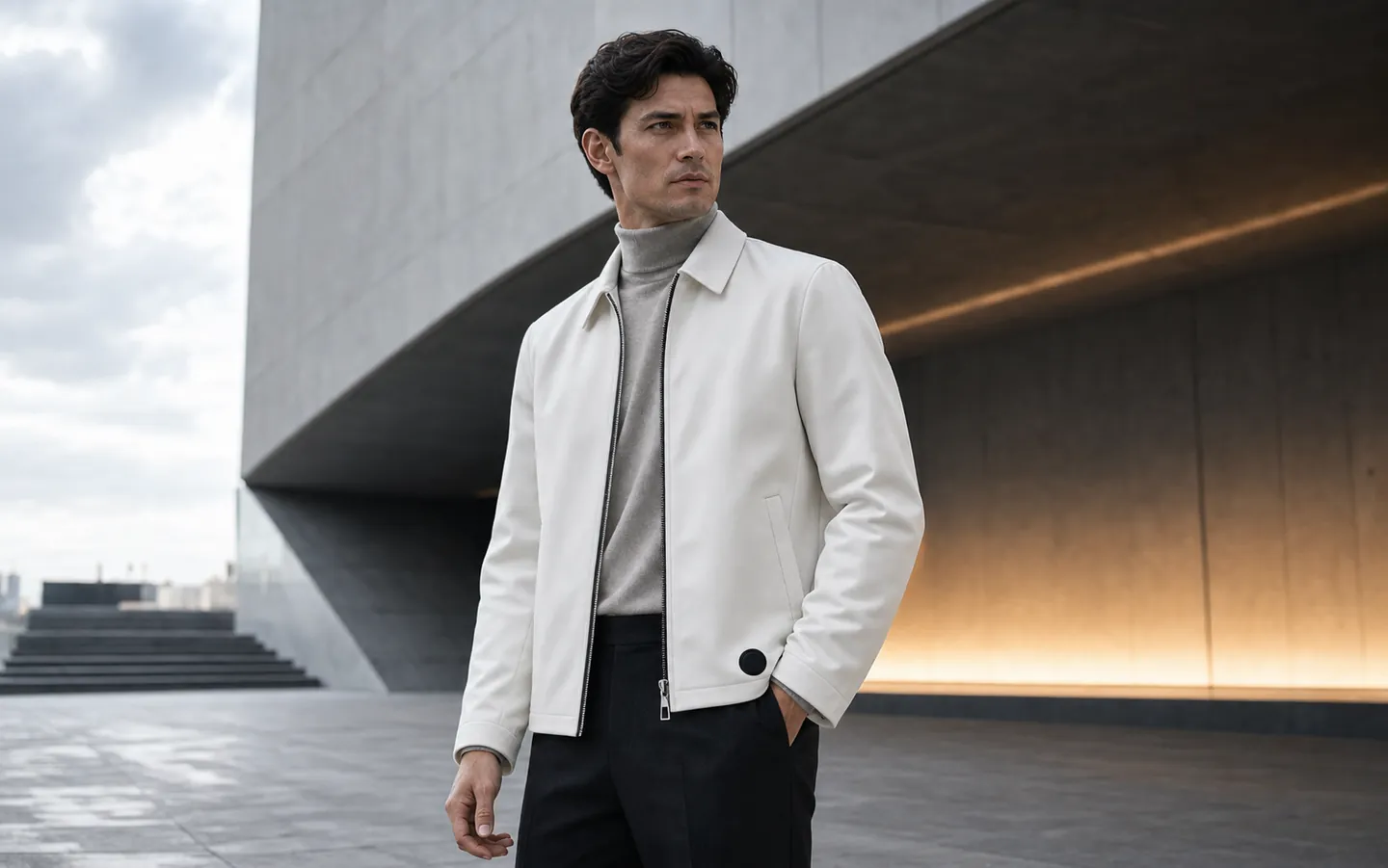 02
02Flexible heating zones that preserve drape, silhouette and comfort across premium garment collections.
Hand feel / pattern design / wash care 03
03Controlled thermal-comfort formats shaped around the body, simple operation and consistent surface warmth.
Temperature control / ergonomics / cleanability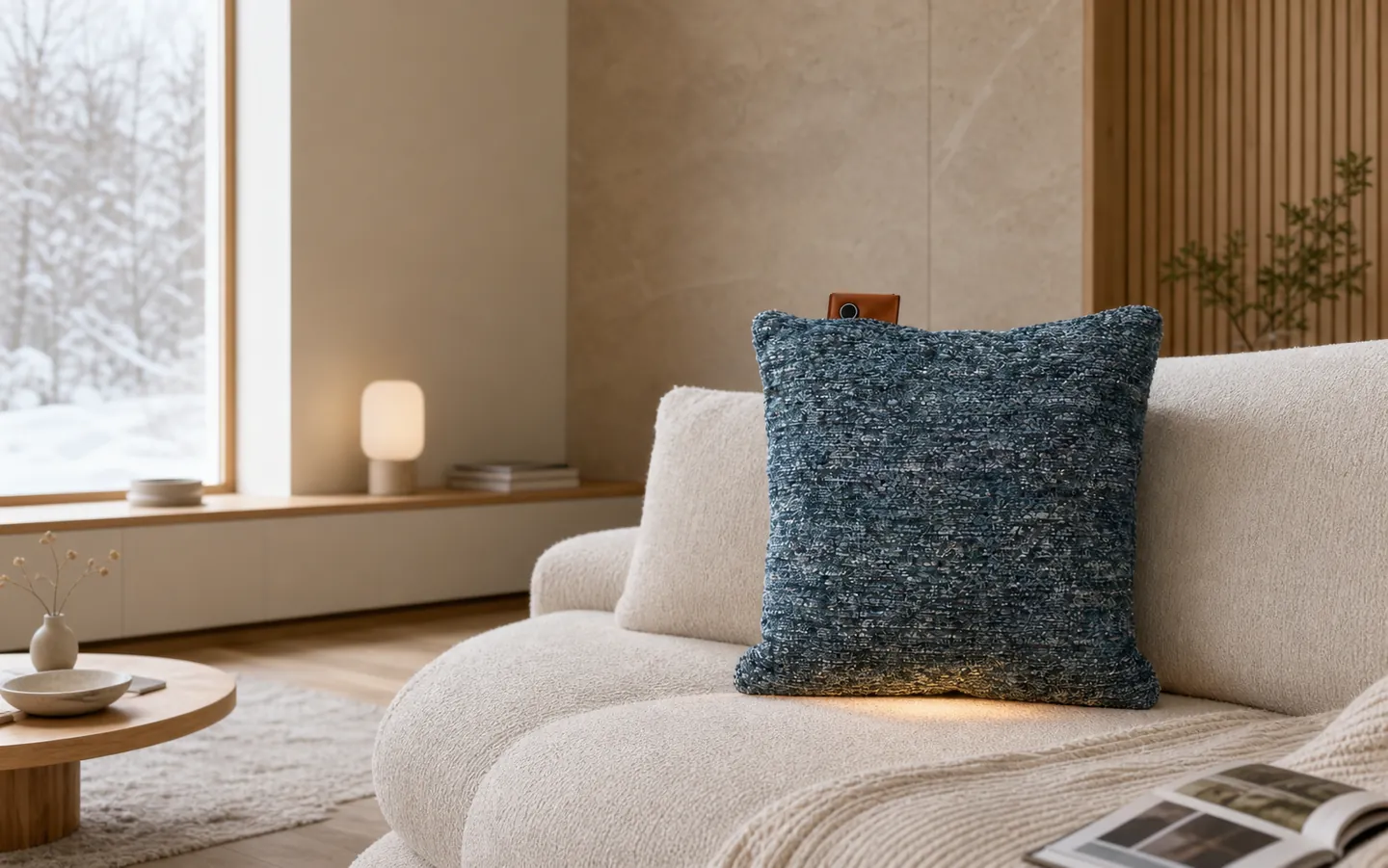 04
04Quiet low-voltage warmth for seating, cushions, bedding, throws, mattresses and workplace comfort products.
Softness / broad coverage / household use05Active low-profile warmth for utilities, oil and gas, ports, logistics, construction, cold-chain and field teams.
Mobility / controllable heat / durability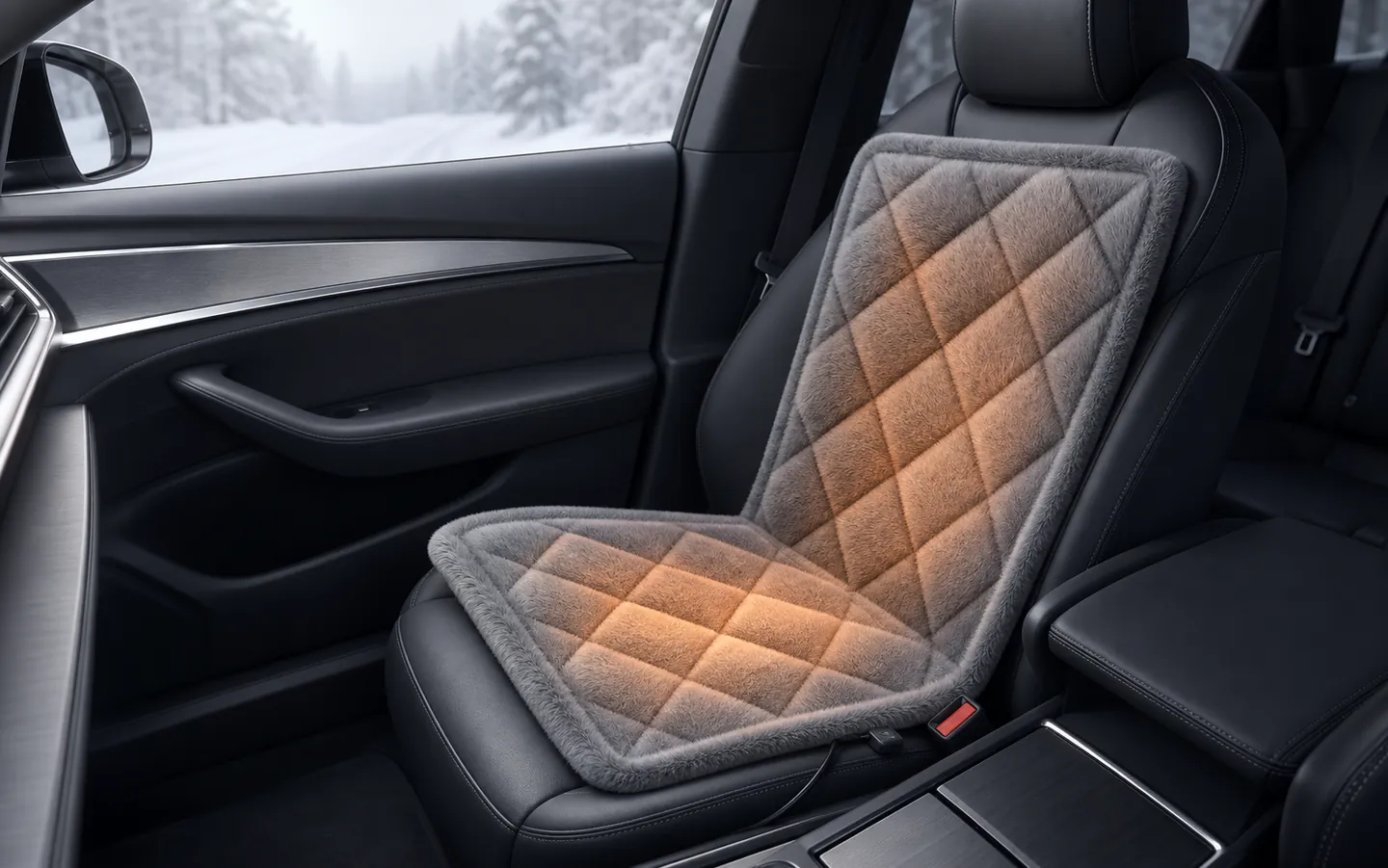 06
06Thin shaped heating surfaces for vehicle seating, portable systems and temperature-sensitive specialist products.
Geometry / power interface / validationIndustry solution profiles
Each sector requires a different balance of heat placement, power, materials, controls, care and compliance. These profiles show how the THERMOVEX platform can be configured around the finished product.
01Outdoor & sports
Outdoor users move between high exertion, exposed rest periods and rapidly changing wind or moisture. The heating system must add controllable warmth without compromising weight, mobility or moisture management.
Apparel normally prioritises targeted core zones and portable 5 V power. Sleeping systems and tent panels can use broader 12 V or 24 V areas when more energy is available.
02Apparel & fashion
Premium apparel needs more than warmth. Materials, wiring, controls and power must remain discreet while the garment retains its drape, hand feel, fit and brand language.
Typical garments use three to five zones, with 5 V USB power for broad compatibility. Zone count, resistance and controller logic are tuned to the insulation stack and required runtime.
03Wellness & care
Comfort-oriented care products require stable surface temperature, ergonomic placement, simple controls and materials selected for close, repeated contact.
Body-contact formats place temperature sensing close to the active area and use a conservative control envelope. Thermal-comfort products are engineered separately from regulated medical devices.
Medical claims and regulated-device pathways require project-specific validation and regulatory review.
04Home & living
Home products must feel soft, look refined and deliver broad, balanced comfort without intrusive hardware, noise or uneven hot spots.
As the heated area grows, the architecture moves from portable 5 V modules to 12 V or 24 V systems. Multi-zone sensing helps large surfaces maintain a balanced operating temperature.
05Industrial workwear
Outdoor workers can face temperatures around -10 to -15°C or below together with wind, rain, snow and long mobile shifts. Passive insulation adds bulk and cannot respond as workload or exposure changes.
Heat zones are placed around core exposure and working posture while keeping seams, reflective trim, harness areas and PPE interfaces clear. Runtime is balanced against battery capacity and task intensity.
Developed from the submitted outdoor-worker thermal protection brief. Final temperature, runtime, wash method, PPE compatibility and conformity evidence are confirmed for each customised workwear program.
06Mobility & specialist systems
Mobility and specialist systems place strict limits on thickness, power, pressure distribution and interfaces. Heat must follow the product geometry and work consistently through repeated loading or transport cycles.
Vehicle seating typically uses shaped 12 V zones. Temperature-sensitive logistics requires a different sensor position and control band, with compliance defined around the transported contents and intended use.
Temperature-maintenance and medical-logistics applications require project-specific validation; the website does not imply approval for regulated transport or clinical use.
System selection by product scale
A compact garment and a mattress should not share the same power strategy. THERMOVEX selects voltage, resistance, zone count, sensing and control around the useful heated area, the available energy source and the required duty cycle.
Apparel, wraps, hand warmers and compact cushions
USB power bank / up to 10 W typicalHigher-output workwear and multi-zone outdoor products
Rechargeable pack / up to 15 W typicalVehicle seating, sleeping systems and specialist equipment
Adapter or vehicle supply / up to 18 W typicalFurniture, mattresses, broad panels and tent surfaces
Higher-capacity low-voltage system / project specificReference values are drawn from the supplied technical documentation. Final voltage, power, temperature range, controller and certification route are confirmed for each custom product.
From need to thermal architecture
These questions translate the customer experience into engineering requirements before material selection and prototyping begin.
Define the contact area, body zone, surface geometry and acceptable temperature spread.
Balance voltage, available energy, heat-up time, runtime and interface constraints.
Set duty cycle, wash method, flex, abrasion, moisture and storage requirements.
Map electrical, chemical, textile and market-specific compliance for the target region.
A configurable system
THERMOVEX brings these layers together so heat becomes part of the product architecture rather than an isolated component.
Explore the technology →Start with the use case
Tell us where the product will be used, how it is powered and what the customer should feel.
Share your application →