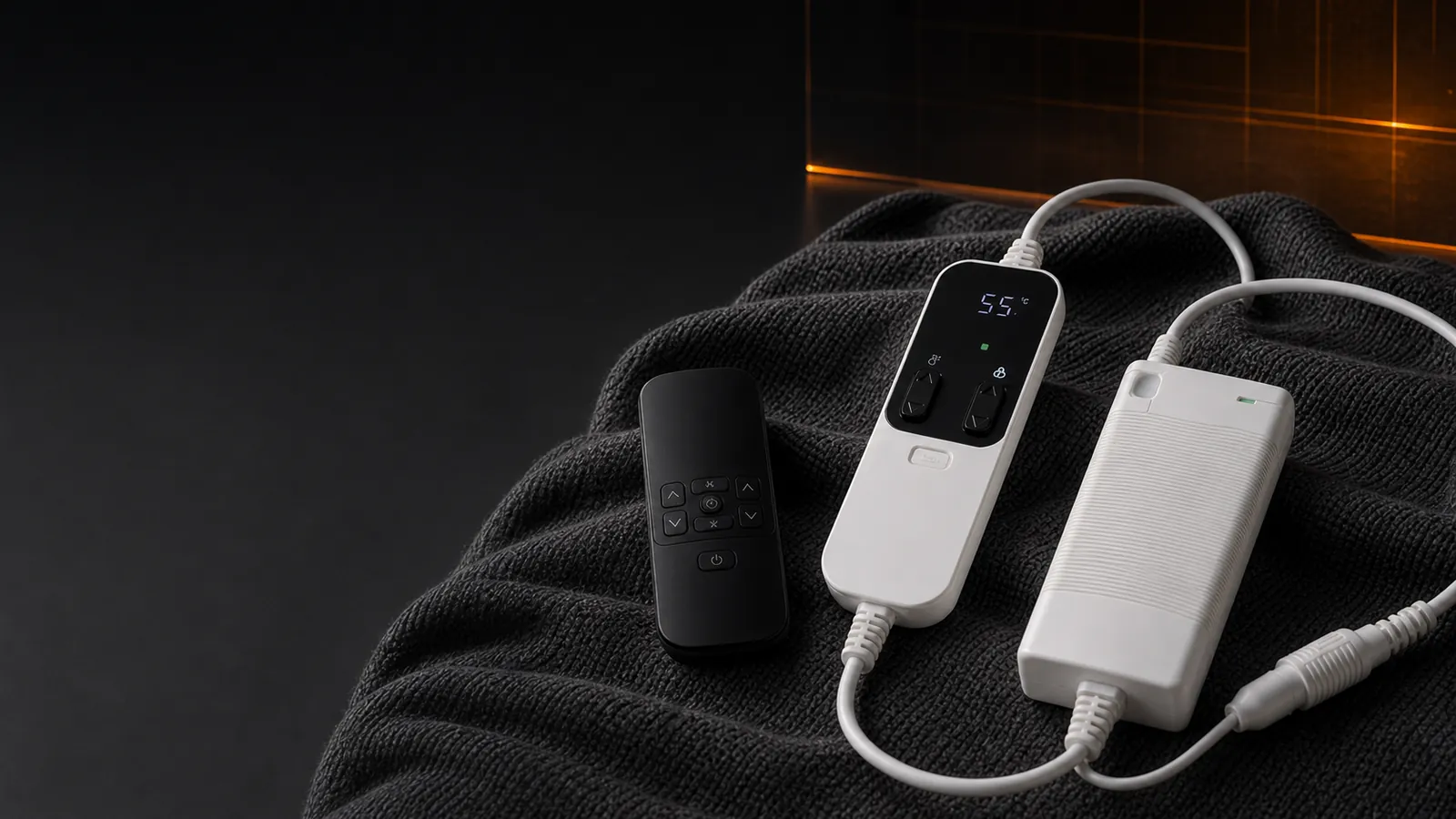
Controller R&D · 21 July 2026New 12 V controller families complete functional development
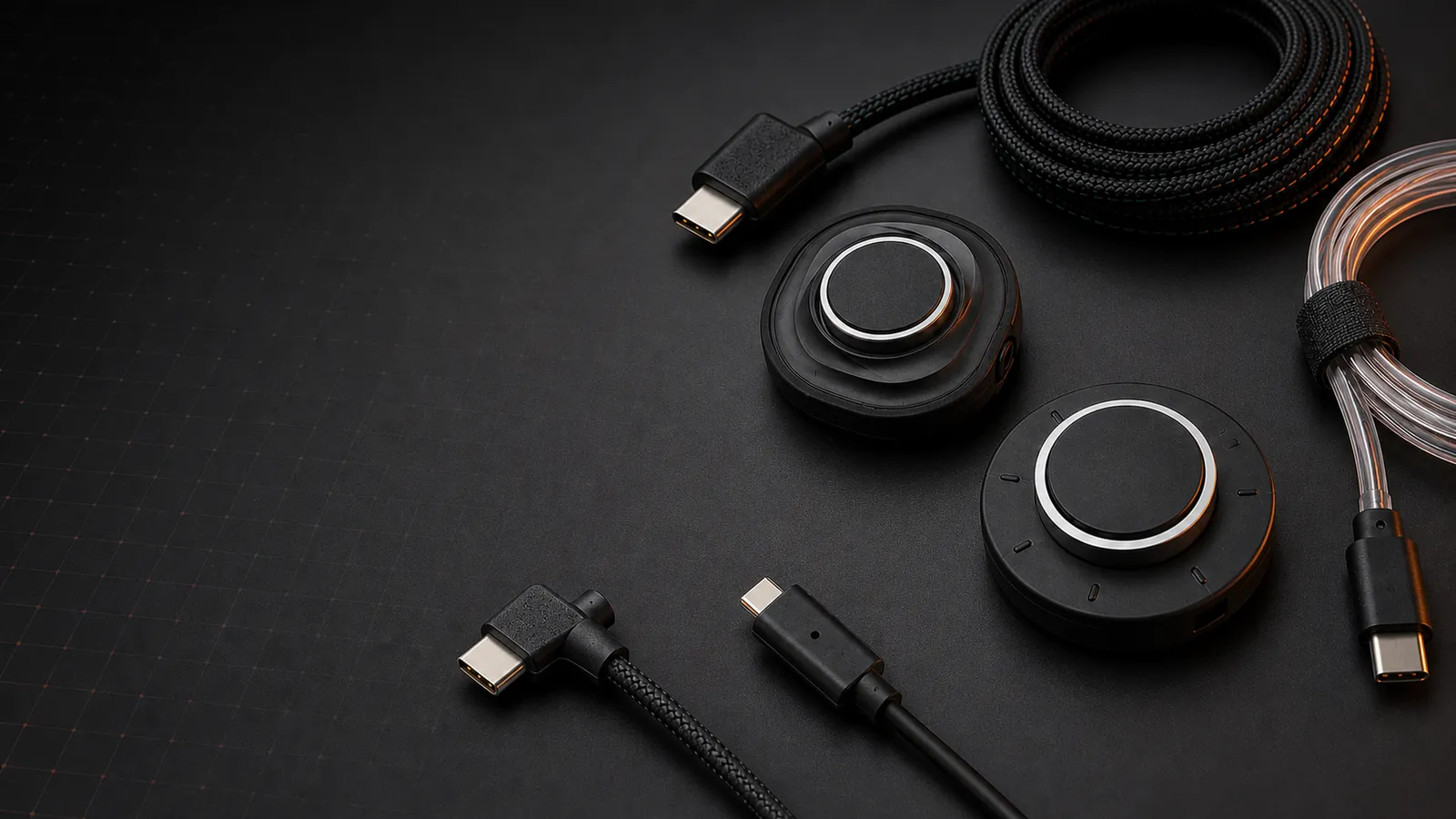
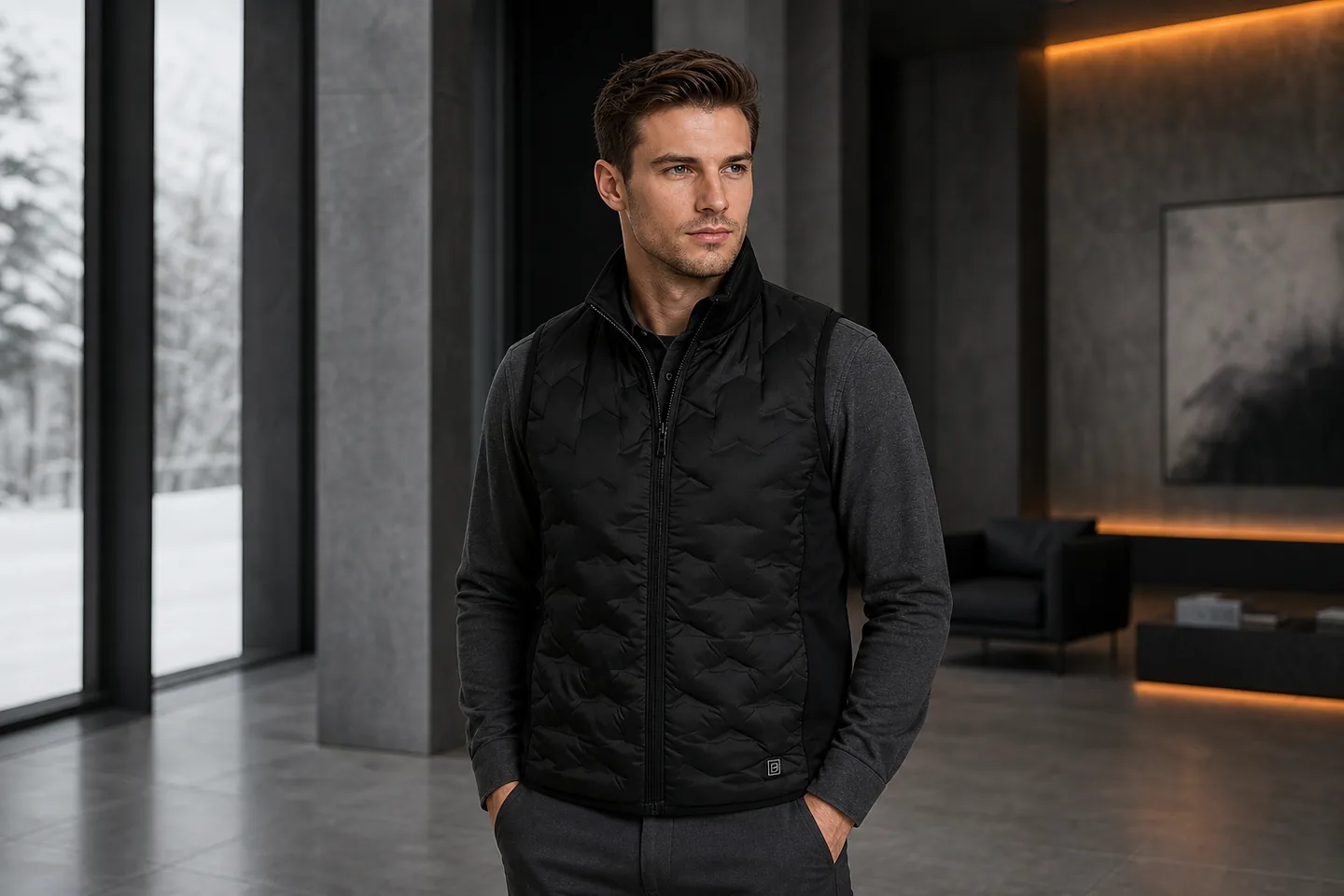
Lotus sew-in and Ring no-sew controller concepts give brands alternative product-integration routes while retaining temperature-level control and protection logic.
- Three-level and four-level reference control modes
- Short-circuit, overcurrent, ESD and overtemperature protection paths
- Braided, transparent and configurable Type-C cable options
- Controller colour, cable length and interface can be developed for the finished product
Explore the related page → System validation · 20 July 2026S Series integrates material, sensing and smart control
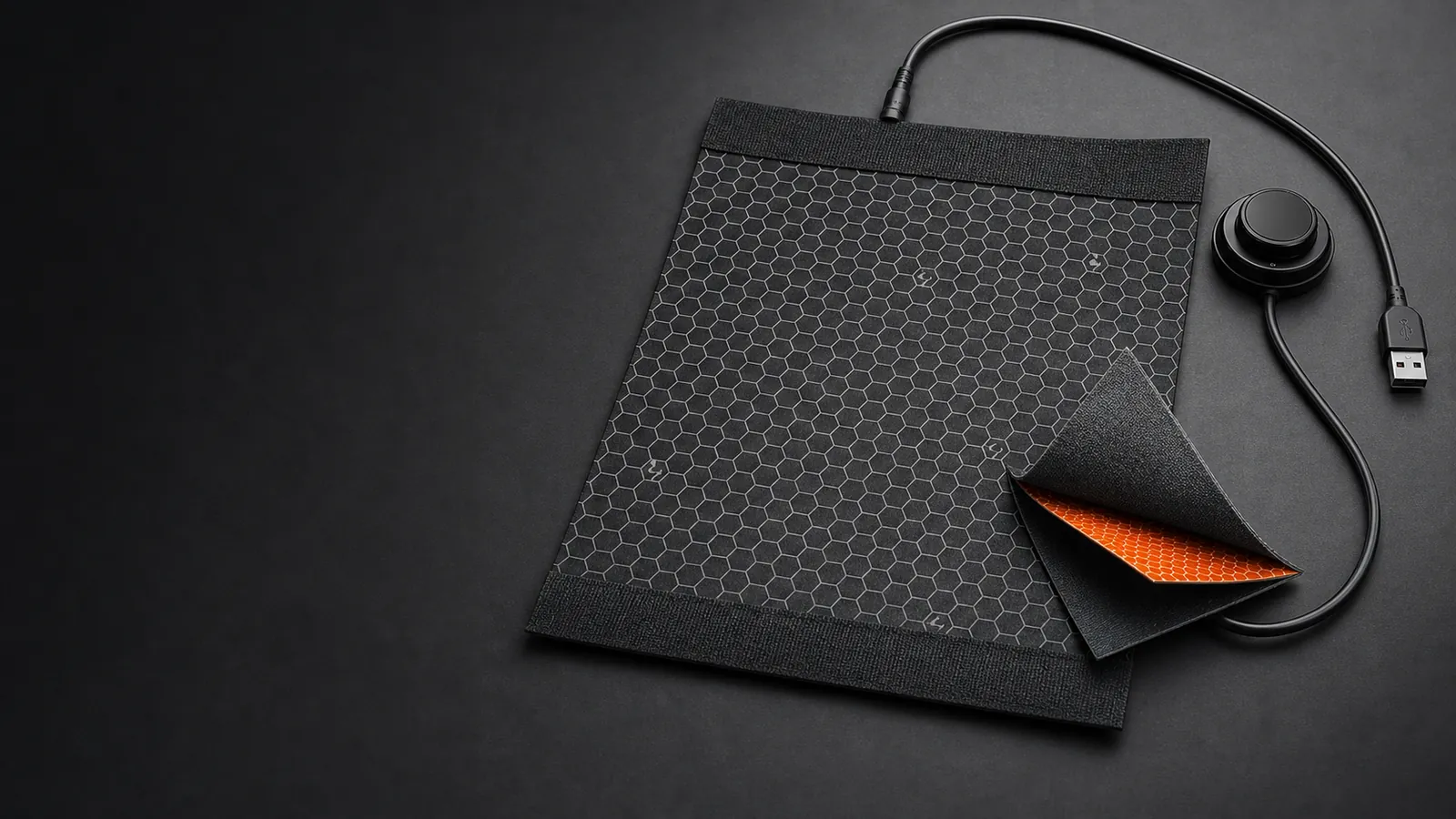
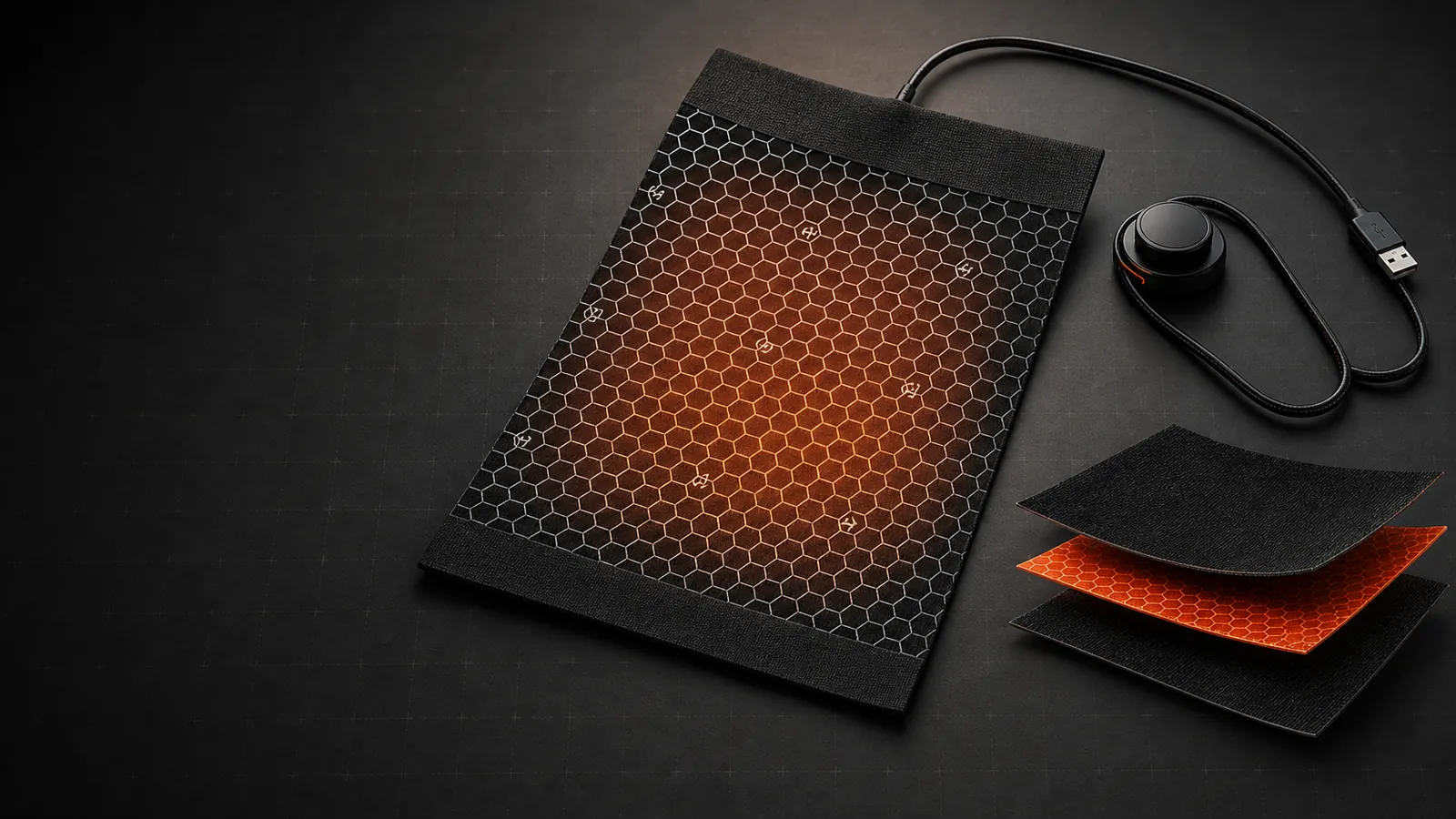
The complete S Series design combines a sewable nano-carbon textile, temperature sensing, wiring and controller in one product-development platform.
- 0.3 mm reference total thickness
- 100 wash cycles and 10,000 flex cycles shown in supplied engineering materials
- Up to 10,000 hours continuous-service reference
- Uniform-heating target with surface temperature difference of 5°C or less
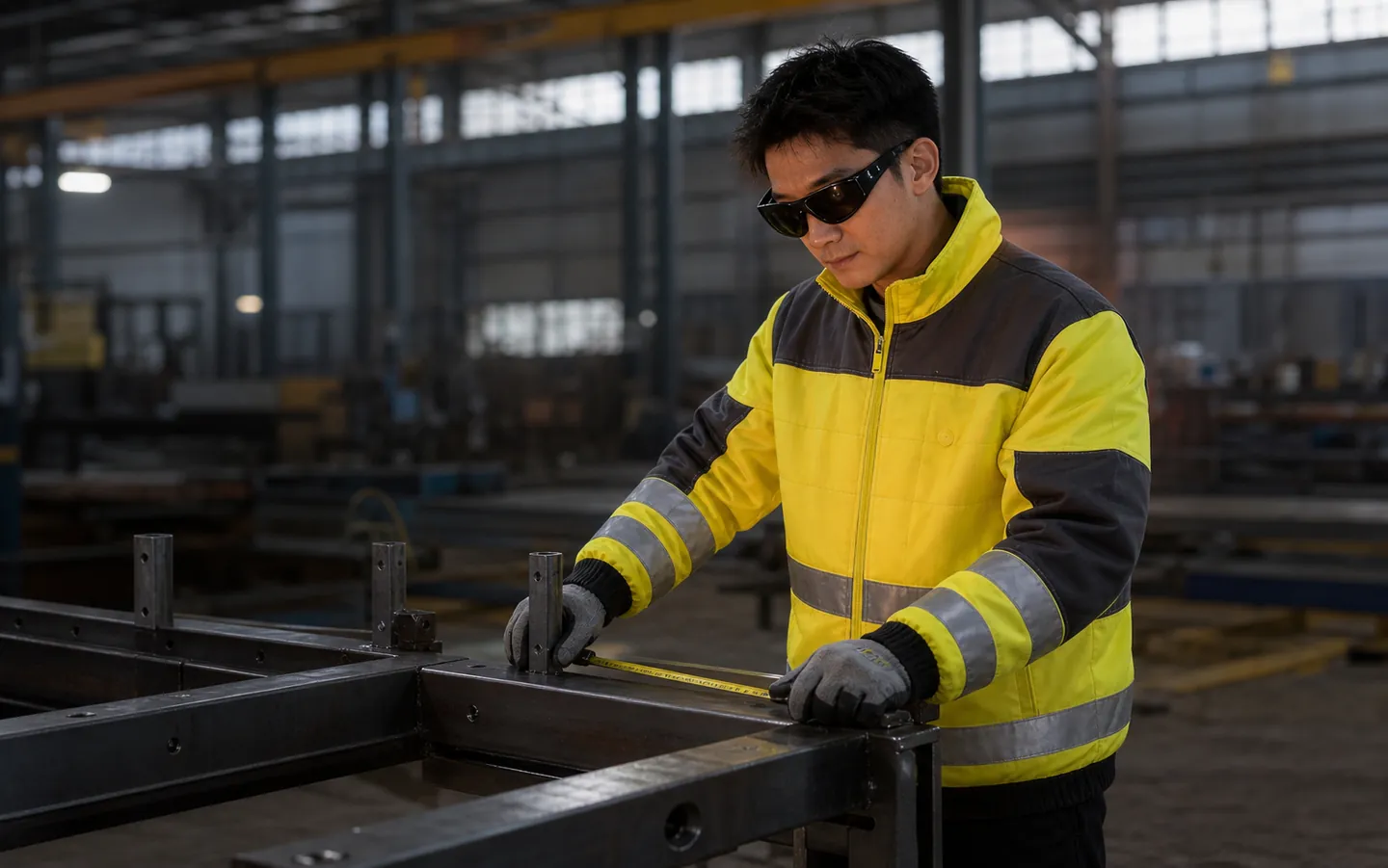
Explore the related page → Application brief · 17 July 2026Active thermal protection for industrial workwear
Cold, wet and exposed work demands more than passive insulation. A useful heated-workwear system must balance warmth, movement, runtime, washing and PPE integration.
- 5 V low-voltage reference platform powered by a common USB power bank
- Typical three-to-five-zone heating around selected core areas
- Closed-loop temperature control tuned to the garment and environment
- Wash-ready module, connector and garment architecture
Explore the related page → Engineering note · 17 July 2026Washability is a system property—not a material claim
Reliable washing depends on the heating textile, electrodes, leads, controller interface, strain relief, garment construction and care method working together.
- Define the finished-product wash method before module design
- Protect transitions between soft textiles and rigid electronics
- Track resistance and function through repeated wash cycles
- Validate every production configuration, not only the base material
Explore the related page → Technology explained · 17 July 2026Why closed-loop temperature control matters
Fixed power levels do not automatically produce a stable surface temperature. Closed-loop sensing measures the heating surface and adjusts output as conditions change.
- High-precision NTC sensing at the heating layer
- PWM-regulated output
- Selectable temperature levels with visual indication
- Open-circuit, short-circuit, overcurrent and overtemperature protection
Explore the related page →